Composition
is surely one of the biggest, more influential things, which will decide the
outcome of your art, basically if it looks great or not. Sadly it is often
overlooked by artist, who just let their artwork be determined by eye, which
isn’t necessary always bad, as we do all have some form of artistic judgment.
However it is worth to know the rules, and what Master Painters spent their
life on to perfect their masterpieces. We also have to forget about rule of
thirds, because we are beyond that. There are more complicated and advanced
rules to improve the visual art.

An artist at work will usually stands
at his easel, screen, sketchbook and will view his picture at various
distances, look at it over his shoulder, look at it in reverse, mirrored, will
turn it upside down at times and he will develop it with dots or spots of
colour here and there. He will put in points of accent and carefully and often change
them. Why you may ask? The artist strives for perfect balance or equipoise. The
sensitive eye of artist and viewer test every picture for balance, a judgement usually acquired naturally by everyone as I previously mentioned, with or
without knowledge of artistic laws.
There are many types of tackling this
subject of composition, which master artists have studied for years.
The Elements of Composition in art are used to arrange or organize the components in a way that is pleasing to the artist and, hopefully, the viewer. It helps give structure to the layout and the way the subject is presented.
The Elements of Composition in art are used to arrange or organize the components in a way that is pleasing to the artist and, hopefully, the viewer. It helps give structure to the layout and the way the subject is presented.
- Unity: Do all the parts of the composition feel as if they belong together, or does something feel stuck on, awkwardly out of place?
- Balance: Having a symmetrical arrangement adds a sense of calm, whereas an asymmetrical arrangement creates a sense of unease, imbalance.
- Movement: There many ways to give a sense of movement in a painting, such as the arrangement of objects, the position of figures, the flow of a river.
- Rhythm: In much the same way music does, a piece of art can have a rhythm or underlying beat that leads and paces the eye as you look at it. Look for the large underlying shapes (squares, triangles, etc.) and repeated colour.
- Focus (or Emphasis): The viewer's eye ultimately wants to rest of the "most important" thing or focal point in the painting, otherwise the eye feels lost, wandering around in space.
- Contrast: Strong differences between light and dark, or minimal, such as Whistler did in his Nocturne series.
- Pattern: An underlying structure, the basic lines and shapes in the composition.
- Proportion: How things fit together, big and small, nearby and distant.
With that in mind there are also visual guidelines, to help artist with composition. For example improved version of Rule of Thirds, called The Golden Ratio, yes indeed, it already sounds less cheap. However I am not going to get into purely technical bits.
(It's maths and maths is scary) Broad definition and explanation found - here.
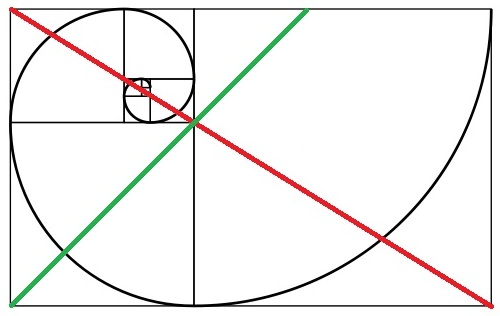

How does it apply to games? How do you
transfer it to 3D form? Simple, you
follow the same rules. The concept stays the same. Artists and Tech Artist will
have to go through the same path. Simply by it feels right, it looks good. The
tricks with 3D will also play around more with focal length/ depth of field.
In conclusion what has been studied in
past centuries can be still applied to every artistic medium nowadays.
Reference:
Pictorial Composition by Henry Rankin Poore

No comments:
Post a Comment